





Misread CT $15.5M


The $15.5 Million Wake-Up Call: Teleradiology Malpractice and the Cost of Haste Resulting in a Misread CT Scan
In the high-stakes environment of an Emergency Room, time is of the essence. However, a recent verdict serves as a sobering reminder that when speed replaces diligence, the consequences can be fatal. A jury awarded $15.5 million to the family of a 74-year-old man. His life irrevocably altered—and eventually ended—due to a misread spinal CT scan.
The case specifically highlights a growing concern in modern medicine. The reliance on international teleradiology and the potential for medical malpractice when doctors review complex diagnostic images in mere minutes.
The Case: A Five-Minute Oversight
The patient entered the hospital with a suspected spine injury, requiring urgent diagnostic imaging of his spine. A teleradiologist (a radiologist working remotely) in Thailand did the preliminary interpretation of his CT scans. The doctor misread the CT scans and subsequently reported the scans as “completely normal for a 74-year-old”.
Afterward, based on this “clear” report, ER physicians removed the patient’s protective neck brace. Shortly after, his condition spiraled, leading to permanent paralysis (quadriplegia) and his death two and a half years later. The jury’s decision hinged on a startling audit. The doctor had spent only five minutes reviewing two separate CT scans. This is a duration far below the standard of care required for such complex images.
What is a CT Scan?
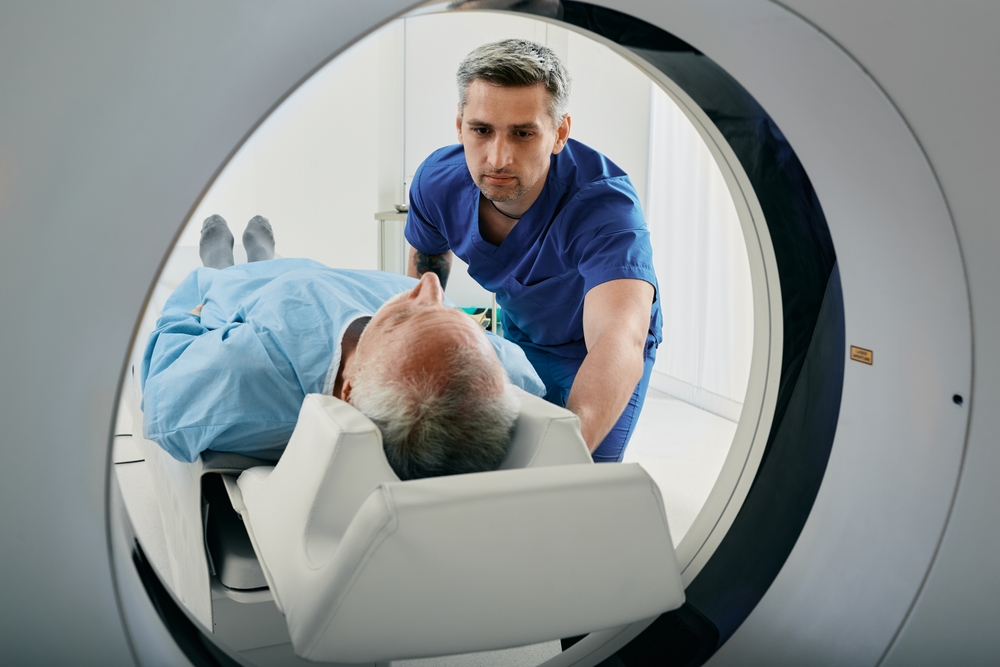
A Computed Tomography (CT) scan is a powerful diagnostic tool that uses a series of X-ray images taken from different angles around your body. A computer then processes these “slices” to create cross-sectional images of the bones, blood vessels, and soft tissues.
In emergency trauma cases, the CT scan is the “gold standard” for identifying fractures or displacements in the spinal column. It allows radiologists to see details that a standard 2D X-ray might miss, such as small bone fragments or subtle misalignments of the vertebrae.
Spinal Damage: What the Scan Should Have Shown
In a case involving spinal trauma, a radiologist is looking for several critical indicators:
- Vertebral Fractures: Breaks in the bony structure of the spine.
- Subluxation: Partial dislocation of the spinal joints.
- Spinal Canal Narrowing (Stenosis): Evidence that bone or disc material is pressing against the spinal cord.
- Hematomas: Internal bleeding that can put pressure on the nerves.
In this patient’s case, while the preliminary read claimed the spine was “normal,” a later final report noted significant abnormalities that went unaddressed during the most critical window of his care.
The Danger of Premature Neck Brace Removal
When a patient presents with a potential neck or back injury, medical providers place them in a cervical collar (neck brace) to maintain “spinal precautions.” This immobilizes the spine to prevent any movement that could damage the spinal cord.
If a CT scan is misread as “normal” and the brace is removed prematurely, the results can be catastrophic. Without the brace, a fractured or unstable spine can shift. Even a small movement—tilting the head or being repositioned in bed—can cause a bone fragment to sever or crush the spinal cord. This is precisely the “deterioration” that led to the plaintiff’s paralysis.
Understanding Quadriplegia
The verdict focused heavily on the fact that the malpractice resulted in quadriplegia (also known as tetraplegia).
Quadriplegia is a form of paralysis that results in the partial or total loss of use of all four limbs and the torso. This typically occurs when there is an injury to the cervical (neck) section of the spinal cord. Because the spinal cord acts as the main “data cable” for the brain, an injury high up in the neck blocks signals to everything below it, including the arms, legs, and even the muscles required for breathing.
For a 74-year-old, the onset of quadriplegia is not just a loss of mobility; it is a total loss of independence that places immense strain on the respiratory and cardiovascular systems, often leading to a shortened life expectancy.
The Standard Time to Read a CT Scan: How Fast is Too Fast?
One of the most damning pieces of evidence in this trial was the five-minute review time for two CT scans.
While there is no “hard” universal timer, medical literature and expert testimony generally suggest that a thorough review of complex spinal CTs—which involve hundreds of individual image “slices”—requires significantly more time than 150 seconds per scan. Radiologists must compare different views (axial, sagittal, and coronal), check for subtle bone density changes, and ensure no soft tissue swelling is present.
The jury viewed the five-minute “speed-read” as a lack of diligence that rose to the level of negligence.
The Dangers of International Telemedicine – Misread CT Scans
Telemedicine allows hospitals to have 24/7 radiology coverage by sending images to doctors in different time zones (like Thailand) where it is currently daylight. However, this “follow-the-sun” model introduces unique malpractice risks:
- Volume Over Value: Teleradiologists are often paid per “read,” which can create an implicit incentive to move through images as quickly as possible to increase compensation.
- Lack of Context: A remote doctor does not see the patient. They lack the “clinical correlation”—the ability to see that the patient is in extreme pain or showing neurological deficits—which might prompt a more careful look at the scan.
A Precedent for Patient Safety
The $15.5 million verdict is a victory for patient advocacy. Consequently, it sends a clear message to teleradiology firms and hospitals: the convenience of remote medicine does not excuse a departure from the standard of care. Whether a doctor is in the next room or halfway across the globe, they owe the patient their full, focused attention.
You can read Blog posts on other Verdicts.
Mark Kopec is a top-rated Baltimore medical malpractice lawyer. Contact us at 800-604-0704 to speak directly with Attorney Kopec in a free consultation. The Kopec Law Firm is in Baltimore and helps clients throughout Maryland and Washington, D.C. Thank you for reading the Baltimore Medical Malpractice Lawyer Blog.