Talk to Lawyer
Mark Kopec Now
Mark Kopec Now






The Papanicolaou test, commonly known as the Pap smear, is one of the most successful public health interventions in medical history. Since its widespread adoption, it has reduced cervical cancer deaths by more than 70%. However, because the pap smear test relies heavily on human interpretation and strict clinical follow-up, it is also a frequent subject of medical malpractice litigation. When a doctor misreads a pap smear or poorly manages a result, the consequences are often catastrophic, allowing a highly preventable cancer to progress to advanced stages.
To understand the Pap smear, one must understand the cervix. The cervix is the lower, narrow portion of the uterus that opens into the vagina. It acts as a gateway, allowing menstrual blood to exit and sperm to enter.
The cervix has two main types of cells:
The area where these two cell types meet is the transformation zone. This is the most critical area for a Pap smear because it is where nearly all cervical cancers and precancerous changes begin.
The test is named after Dr. George Papanicolaou, a Greek physician who began researching vaginal cytology in the 1920s. Initially, his work was met with skepticism; the prevailing medical thought was that cancer could only be diagnosed through a tissue biopsy, not by looking at “sloughed-off” cells.
It wasn’t until 1941, when Papanicolaou published Diagnosis of Uterine Cancer by the Vaginal Smear, that the medical community realized they had a non-invasive way to detect cancer before a tumor was even visible. By the 1950s, the Pap smear became a routine part of gynecological care, transforming cervical cancer from a leading cause of death for women into a preventable condition.
A Pap smear is a cytology test, meaning it examines individual cells rather than a chunk of tissue.
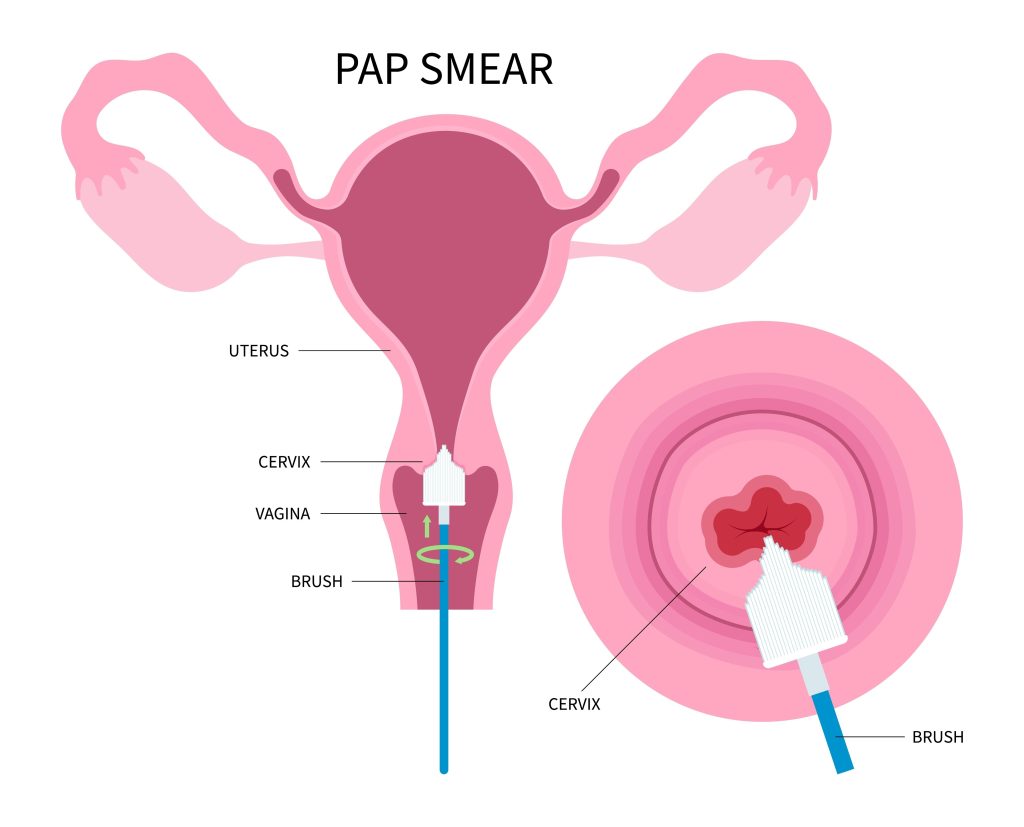
It is a common misconception that a Pap smear tests for “everything” related to reproductive health.
Several doctors and other medical providers form the “chain of care” for a Pap smear:
Medical malpractice occurs when a provider deviates from the standard of care, resulting in injury or death. In the context of Pap smears, claims generally fall into three categories:
This is the most common form of Pap smear litigation. It involves a cytotechnologist or pathologist looking at a slide containing clearly abnormal cells and marking it as “Normal.”
Even if the lab correctly identifies a precancerous lesion, malpractice can occur if the doctor’s office fails to act.
If a patient presents for an annual exam and the provider fails to offer or perform a Pap smear according to established guidelines (such as those from ACOG or the ACS), and the patient later develops cervical cancer, the provider may be liable.
The Pap smear remains a miracle of modern medicine, but its success depends on a flawless handoff of information between the patient, the clinician, and the lab. When a link in that chain breaks, a patient loses the opportunity for early intervention—turning a treatable condition into a life-threatening one.
If you suspect a delay in diagnosis occurred despite regular screening, it is vital to have the original pathology slides reviewed by an independent expert.
If you have any concerns or questions about pap smear medical malpractice, then visit the Kopec Law Firm free consultation page or video. Then contact us at 800-604-0704 to speak directly with Attorney Mark Kopec. He is a top-rated Baltimore medical malpractice lawyer. The Kopec Law Firm is in Baltimore and pursues cases throughout Maryland and Washington, D.C.