Talk to Lawyer
Mark Kopec Now
Mark Kopec Now






Pericarditis is a serious inflammatory heart condition that requires swift clinical recognition and appropriate management. Because its primary symptom—acute chest pain—frequently mimics other severe events like a myocardial infarction (heart attack), a doctor following the standard of care is necessary. When doctors fail to recognize, properly test for, or correctly treat pericarditis, the clinical fallout can be severe, paving the way for medical malpractice and even wrongful death claims.
To understand pericarditis, one must first understand the anatomy of the heart’s outer structural layer. The heart is in a double walled sac, the pericardium.
Pericarditis occurs when these serous layers become inflamed, rubbing against one another like sandpaper and causing severe pain and lack of comfort.
The vast majority of acute pericarditis cases do not have a specific root cause that can be identified. However, known causes include:
Individuals at higher risk include men aged 20 to 50, patients with a history of recent viral infections, individuals suffering from autoimmune diseases, and patients after recent cardiac procedures or chest trauma.
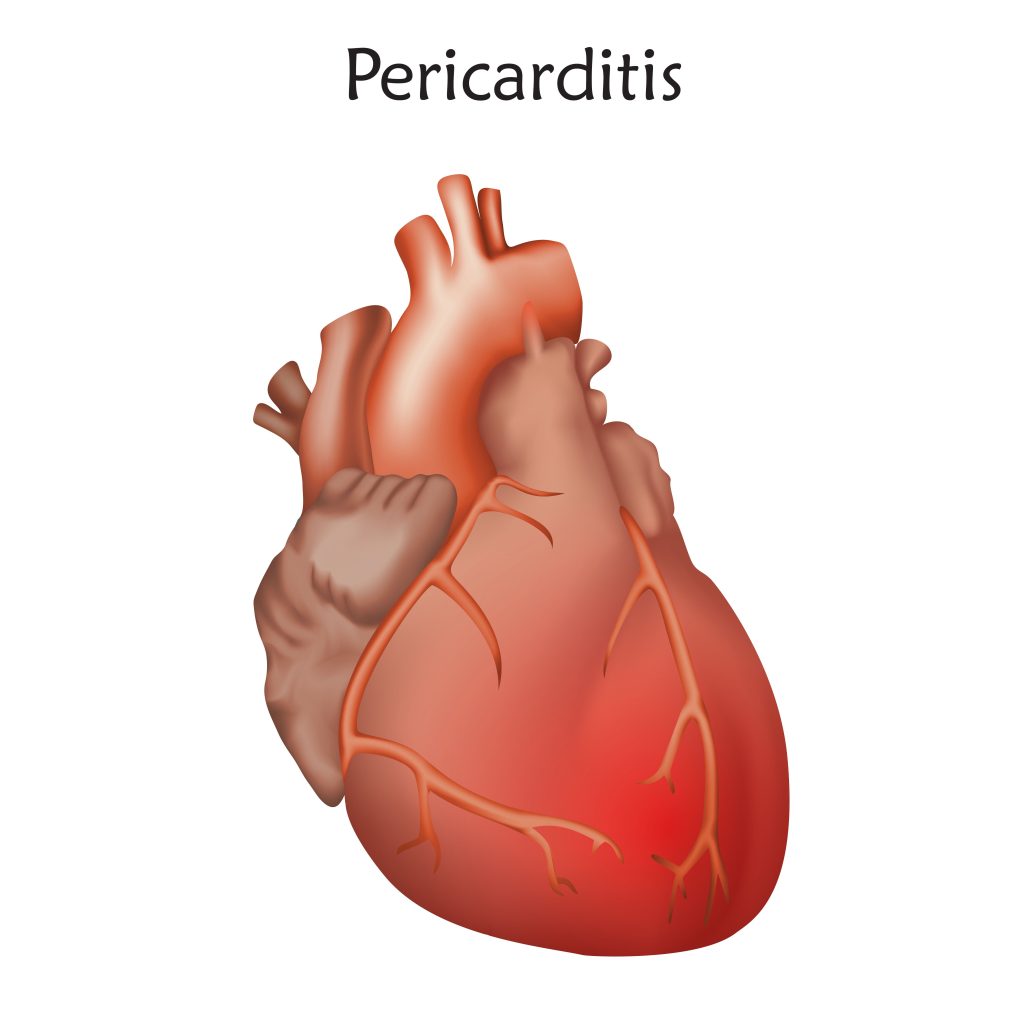
The clinical presentation of pericarditis is distinct but easily confused with other chest conditions. Symptoms include:
When a patient presents with symptoms, the process usually begins with an emergency medicine physician, a primary care provider (PCP), or an urgent care provider. Once a cardiac anomaly is suspected, the patient is referred to a cardiologist for a urgent diagnosis.
To secure a diagnosis, medical providers look for at least two of the four primary diagnosis criteria (chest pain, friction rub, specific EKG changes, or new pericardial effusion or one that is getting worse):
| Test | What It Involves | What the Test Shows in Pericarditis |
|---|---|---|
| Electrocardiogram (ECG or EKG) | Measures the electrical activity of the heart. | Widespread, diffuse ST-segment elevation and PR-segment depression across multiple leads, which helps distinguish it from a localized heart attack. |
| Echocardiogram | An ultrasound of the heart to evaluate structure and fluid. | Detects the presence of a pericardial effusion (excess fluid in the sac). It also ensures the heart muscle is contracting normally. |
| Blood Tests | Drawing blood to analyze specific systemic markers. | Falsely elevated troponin can occur if the inflammation spreads to the heart muscle (myopericarditis). Additionally, elevated inflammatory markers like C-reactive protein (CRP) and erythrocyte sedimentation rate (ESR) are common. |
| Cardiac MRI or CT Scan | Advanced cross-sectional thoracic imaging. | Shows pericardial thickening or late gadolinium enhancement, indicating active tissue inflammation. |
A cardiologist primarily manages the ongoing care of pericarditis. If the case is rooted in an autoimmune condition, a rheumatologist is seen. In advanced, complicated cases where fluid must be drained or the sac removed, a cardiac surgeon or thoracic surgeon is required.
For most patients, the prognosis for acute pericarditis is excellent, with full recovery occurring within a few weeks to a few months. However, roughly 15% to 30% of patients experience recurrent pericarditis. If untreated, it can transition into constrictive pericarditis—where the sac permanently thickens and scars, constricting the heart’s chambers—or lead to cardiac tamponade, a lethal emergency where excess fluid prevents the heart from filling with blood.
In the legal arena, medical malpractice claims surrounding pericarditis generally center on a provider’s failure to adhere to the medical standard of care, leading to severe injury or death. These claims usually fall into three distinct buckets:
Pericarditis can be challenging to isolate because its presentation is not specific; in fact, studies show up to 35% of patients are initially misdiagnosed. Malpractice claims frequently arise when a physician completely misses the condition, misinterprets an EKG, or misdiagnoses the chest pain as a harmless musculoskeletal strain or anxiety. If the provider fails to order an echocardiogram or blood work when a friction rub or pleuritic chest pain is present, they may be liable for the patient’s subsequent deterioration.
Conversely, relying blindly on false-positive troponin assays without looking at the broader clinical picture can lead to dangerous failure to diagnose myopericarditis, subjecting patients to unnecessary, invasive cardiac interventions.
Even if there is a diagnosis, a failure to initiate first therapies (like proper dosing of NSAIDs and colchicine) or a failure to schedule continuous follow-ups can constitute malpractice. If a physician notices a pericardial effusion that get worse on an echocardiogram but fails to monitor the patient for signs of cardiac tamponade, they can be legally responsible if the patient suffers obstructive shock or cardiac arrest.
Medical malpractice claims can also arise from surgical errors committed during medical procedures. Iatrogenic cardiac injury is an injury in heart surgeries and interventions like placing pacemakers, cardiac catheterizations, and valve replacements. If a surgeon accidentally perforates a coronary vessel or punctures the pericardium due to malpractice in technique, causing an iatrogenic cardiac tamponade, this can serve as the foundation of a successful medical malpractice lawsuit.
You can read a Baltimore Medical Malpractice Lawyer Blog post on a case involving a related condition, Chest Effusion $25M, and also posts on other case Verdicts.
If you have been injured in connection with pericarditis, contact us today.
Visit our free consultation page or video. Then contact the Kopec Law Firm at 800-604-0704 to speak directly with Attorney Mark Kopec. He is a top-rated Baltimore medical malpractice lawyer. The Kopec Law Firm is in Baltimore and pursues cases throughout Maryland and Washington, D.C.