Understanding Peritonitis: A Guide to Medical Standards and Malpractice
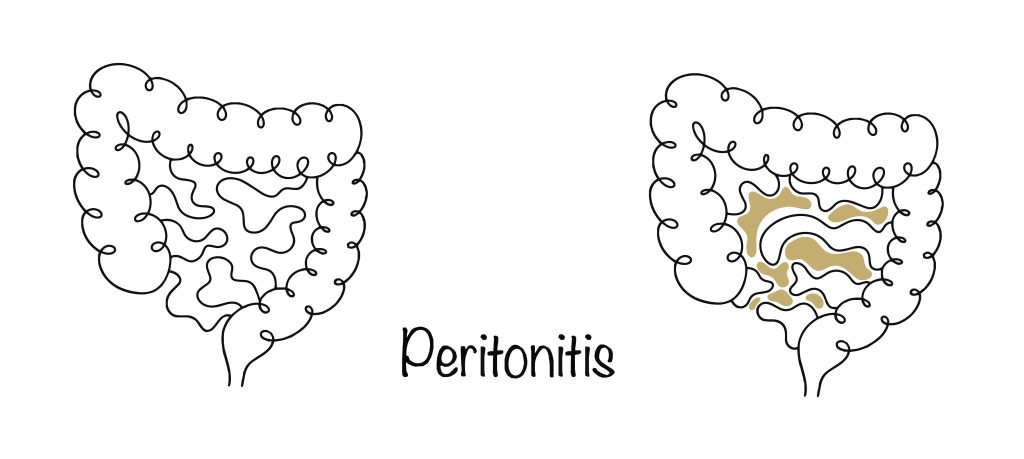
Peritonitis is a life-threatening medical emergency characterized by inflammation of the peritoneum—the thin, silk-like membrane that lines the inner abdominal wall and covers the organs within your abdomen. Because the peritoneum is responsible for protecting the abdominal cavity, any infection or irritation here can rapidly lead to sepsis, multi-organ failure, and death if not managed with extreme urgency. Consequently, peritonitis can be the basis for a medical malpractice claim.
In the legal and medical worlds, peritonitis is often the “smoking gun” of a surgical error or a diagnostic failure. When medical providers fail to identify the signs early or cause the condition through negligence, the results are almost always catastrophic.
What Causes Peritonitis?
Peritonitis is generally classified into two main categories: Primary and Secondary.
1. Primary Spontaneous Peritonitis (SBP)
This occurs when an infection develops within the peritoneal fluid without an obvious source of puncture or organ rupture. It is most common in patients with:
Liver Cirrhosis: Fluid buildup (ascites) in the abdomen becomes a breeding ground for bacteria.
This is caused by the “leakage” of bacteria or foreign substances into the abdominal cavity from a hole (perforation) in the gastrointestinal tract. Peritonitis causes can involve medical malpractice and include:
Physical Examination: Providers look for “rebound tenderness” (pain when pressure is released) and abdominal rigidity. A “board-like” abdomen is a classic sign of peritonitis.
Blood Tests: Providers look for a high White Blood Cell (WBC) count. This indicates the body is aggressively fighting a massive infection. They may also run blood cultures to see if the infection has entered the bloodstream (sepsis).
Imaging (CT Scan): The “Gold Standard.” A CT scan uses X-rays to create cross-sectional images. It can detect free air in the abdominal cavity (pneumoperitoneum), which proves an organ has perforated, or fluid collections (abscesses).
Peritoneal Fluid Analysis (Paracentesis): A doctor uses a needle to withdraw a sample of fluid from the abdomen. If the lab finds a high white cell count or bacteria in this fluid, the diagnosis is confirmed.
Treatment: How Medical Teams Intervene
Once diagnosed, the patient is generally transferred to the care of General Surgeons, Infectious Disease Specialists, and Intensivists (ICU doctors).
The Treatment Protocol
Surgical Intervention (Source Control): In secondary peritonitis, surgery is mandatory. The surgeon must find the hole (in the appendix, colon, or stomach) and repair it. They also perform a “washout,” where the abdominal cavity is flushed with sterile saline to remove as much bacteria and debris as possible.
Intravenous (IV) Antibiotics: Patients are started on broad-spectrum antibiotics to kill the bacteria that have spread throughout the membrane.
Supportive Care: This includes IV fluids to prevent dehydration and vasopressors if the patient’s blood pressure drops due to septic shock.
Peritonitis Medical Malpractice: When Providers Fail
Peritonitis cases are frequent subjects of medical malpractice litigation because the “Standard of Care” for abdominal pain is very strict. Negligence typically falls into two categories: Causing the condition or Failing to treat it.
1. Medical Malpractice Claims for Causing Peritonitis (Surgical Errors)
Bowel Perforation: During surgery, a doctor may accidentally nick or puncture the bowel. If this isn’t caught and repaired during the surgery, fecal matter leaks into the abdomen, causing peritonitis.
Poor Sterile Technique: Failure to maintain a sterile field during surgery or dialysis catheter insertion can introduce the bacteria that trigger the infection.
2. Medical Malpractice Claims for Failure to Respond to Peritonitis (Diagnostic Errors)
This is perhaps the most common type of claim. It involves misdiagnosis, specifically a “failure to timely diagnose.”
The “Dismissed” Patient: A patient goes to the ER with severe abdominal pain, but the doctor diagnoses them with “simple constipation” or “the flu” and sends them home without a CT scan. By the time the patient returns, the appendix has ruptured, and peritonitis has set in.
Failure to Monitor Post-Op: If a patient shows signs of infection after surgery (fever, high heart rate, extreme pain) and the surgeon ignores these “red flags,” they may be liable for the delay in treating the resulting peritonitis.
Radiological Errors: A radiologist may fail to see the “free air” or fluid on a CT scan that indicates a perforation.
Category
Key Details
Primary Symptoms
Severe pain, bloating, fever, “board-like” abdomen.
Main Diagnosis Tool
CT Scan of the abdomen and pelvis.
Urgency Level
Emergency; requires immediate stabilization.
Main Treatment
Surgery (Source Control) + IV Antibiotics.
Legal Focus
Timeliness of diagnosis and surgical precision.
The Impact of Peritonitis Medical Malpractice
Because peritonitis moves so quickly, a delay of even 12 to 24 hours can be the difference between a routine recovery and a month-long stay in the ICU, permanent colostomy bags, or death. In a legal sense, the plaintiff must prove that the provider’s deviation from the standard of care directly led to these increased “damages.”
If you have a potential peritonitis medical malpractice case, then visit our free consultation page or video. Then contact the Kopec Law Firm at 800-604-0704 to speak directly with Attorney Mark Kopec. He is a top-rated Baltimore medical malpractice lawyer. The Kopec Law Firm is in Baltimore and pursues cases throughout Maryland and Washington, D.C.
What Our Clients Say About Us
At the Kopec Law Firm, we are grateful that satisfied clients express their appreciation!
Dear Mark, I just wanted to express my gratitude for your dedication to my case. As you know, it has been a long and upsetting process for me, which would have been a great deal longer had it not been for the hours you put in helping me with this emotional roller coaster. Thank you again.
Shannon T. in Anne Arundel County
Dear Mark, thank you so much for your help and kindness. You provided the guidance and assistance we needed to obtain some understanding in loss of our child. We will never forget the professional and personal service provided. If anyone is in need of legal representation, I will certainly send them your way. God bless.
Kim C. in Cecil County
I wanted to say thank you for spending time with me regarding my questions about legal issues. Mere words cannot really express my gratitude. You seem to truly care about people.
Client in Baltimore City
Dear Mr. Mark, I’m truly grateful to have had you work on my son’s case. You were up front at all times and were on key every step of the way. I will always recommend your firm. Thank you so much for helping my son. P.S. Every time my son sees you on TV, he says “Mom, that’s my lawyer, Mr. Mark.” 🙂 Thank you again. You did an excellent job on the...
K.N. in Baltimore City
Dear Mark, we want to thank you for all the hard work and time your firm put in our case. You took the time to listen to us and research our case. You were honest and up front regarding the case. You responded to questions and concerns quickly. We would highly recommend your firm and services to anyone who is in need of legal representation. We...
Rebecca T. in Prince George’s County
Super Awesome team and staff! Worked with them for a case they handled for my grandchild about 10yrs ago! Would definitely use them again! I recommend them to everyone I know. Could never thank them enough! Very thorough and knowledgeable! Always kept us in the loop throughout the entire process!!!!
Letha C. in Prince George’s County
Mark explained everything in detail and brought clarity to all of my concerns.
Doris in Edgwater
I am very happy and thankful for your help. You responded very quickly. I am very happy to recommend you.
Linda in Chevy Chase
Mark is a knowledgeable and empathetic lawyer who speaks directly and concisely to evaluate your problem. He doesn't use attorney jargon that confuses people, rather he talks clearly. Although he couldn't help me with my situation, the consultation I had was productive because he answered my questions and gave me some clarity.