Talk to Lawyer
Mark Kopec Now
Mark Kopec Now






In the complex world of modern medicine, vascular access is a cornerstone of treatment. Among the most versatile tools for this purpose is the Peripherally Inserted Central Catheter, commonly known as a PICC line. While PICC lines are instrumental in delivering life-saving treatments, they also represent a significant area of medical legal concern and can be involved in medical malpractice.
This article explores the nature of PICC lines, their history, their clinical applications, and the specific ways in which their use—or the failure to use them—can lead to medical malpractice claims.
A PICC line is a long, thin, flexible tube (catheter) inserted into a peripheral vein. This is typically in the upper arm. Then it threads through the venous system until the tip rests in the superior vena cava, a large vein near the heart.
Unlike a standard intravenous (IV) line, which is short and sits in a small vein in the hand or forearm, a PICC line is “central access.” Because the tip sits in a large vessel with high blood flow, it can handle concentrated medications and long-term infusions that would otherwise damage or collapse smaller peripheral veins.
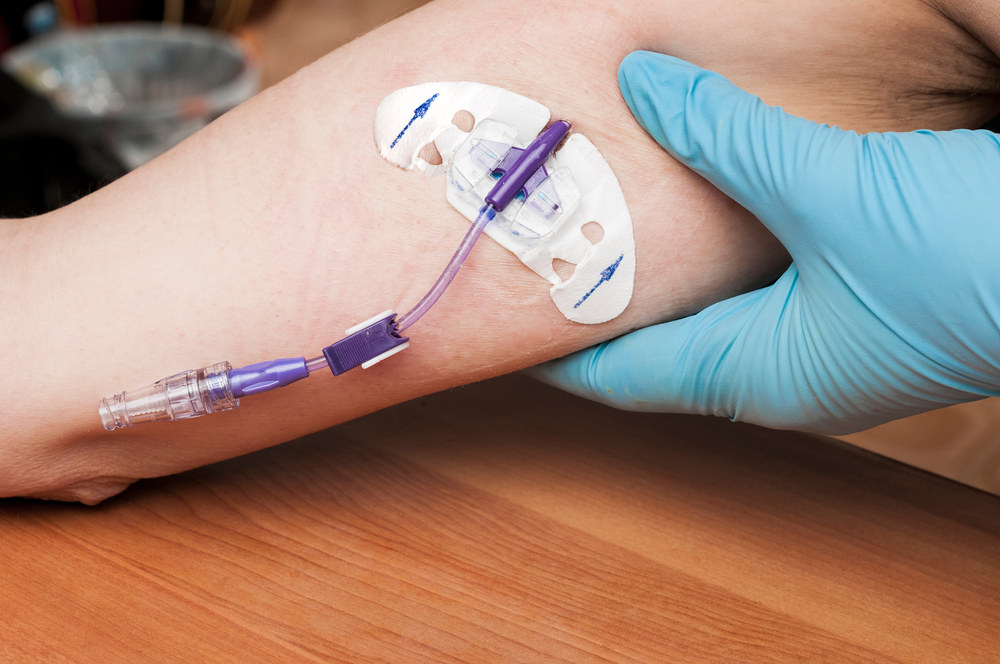
The medical provider typically performs the procedure under ultrasound guidance to locate a suitable vein (such as the basilic or cephalic vein). Once the catheter is threaded to the correct position, its placement must be verified. This is usually via X-ray or real-time fluoroscopy. It ensures the tip hasn’t migrated into the wrong vessel, such as the jugular vein or the heart’s right atrium.
The evolution of central venous access dates back to the mid-20th century, but the PICC line specifically emerged in the 1970s. Early central lines were often “tunneled” through the chest wall or placed directly into the neck (internal jugular vein), which carried high risks of lung puncture (pneumothorax) and infection.
In 1975, Dr. Hoshal and colleagues first described the use of peripherally inserted catheters for delivering total parenteral nutrition (TPN). The goal was to provide the benefits of central access while avoiding the surgical risks of chest-based catheters. Over the decades, improvements in materials—moving from stiff silicone to flexible polyurethane—and the integration of bedside ultrasound have made PICC lines a standard of care in both hospital and home settings.
PICC lines are for patients who require “long-term” IV access (typically more than one week) or specific types of therapy. Common uses include:
Several types of medical providers are involved in the “PICC lifecycle”:
Medical malpractice often involves a “failure to act.” In some cases, a patient may suffer a severe injury because a medical provider failed to order a PICC line when it was clearly indicated.
If a nurse or doctor continues to administer “vesicant” (blister-causing) medications—such as certain chemotherapies or high-concentration potassium—through a standard, small peripheral IV, the medication can leak into the surrounding tissue. This is extravasation. If the provider ignores signs of swelling and pain, the tissue can become necrotic. This can lead to permanent disfigurement or even amputation. In these scenarios, the failure to transition the patient to a PICC line (or other central access) constitutes a breach of the standard of care.
Conversely, the PICC line itself is often the subject of malpractice claims due to negligent insertion, monitoring, or removal. Common legal triggers include:
If a provider fails to confirm the tip location with an X-ray before beginning an infusion, the consequences can be fatal. A catheter tip that is too deep can cause cardiac arrythmias or perforate the heart wall (cardiac tamponade). If the provider misplaces the tip into an artery rather than a vein, the line can pump medications directly to the brain or limbs, causing strokes or limb loss.
A CLABSI may be malpractice if it results from a failure to follow sterile protocols. This includes failing to use a “maximal sterile barrier” (gown, mask, and sterile drapes) during insertion or failing to perform regular, sterile dressing changes.
PICC lines increase the risk of blood clots (DVT) in the arm. Malpractice occurs when medical staff ignore symptoms of a clot. Examples include a swollen, blue, or painful arm—allowing the clot to travel to the lungs (Pulmonary Embolism). Furthermore, if a provider improperly removes a line without having the patient perform specific breathing maneuvers, an air embolism can enter the bloodstream and cause a fatal stroke.
Applying excessive force during removal or failing to inspect the catheter to ensure it is intact can leave a “sheared” piece of plastic in the patient’s venous system. This foreign body can travel to the heart or lungs, requiring emergency surgery to retrieve.
PICC lines are invaluable medical devices that have revolutionized long-term care, yet they carry inherent risks that demand meticulous attention. From a legal perspective, medical malpractice in this field centers on the standard of care. Did the provider follow established protocols for insertion? Did they monitor for known complications? And did they act quickly when something went wrong?
If you or a loved one has suffered a severe complication from a PICC line, it is essential to consult with a medical legal expert. We will determine if the injury was an unavoidable complication or the result of professional negligence.
Visit our free consultation page or video. Then contact the Kopec Law Firm at 800-604-0704 to speak directly with Attorney Mark Kopec. He is a top-rated Baltimore medical malpractice lawyer. The Kopec Law Firm is in Baltimore and pursues cases throughout Maryland and Washington, D.C.