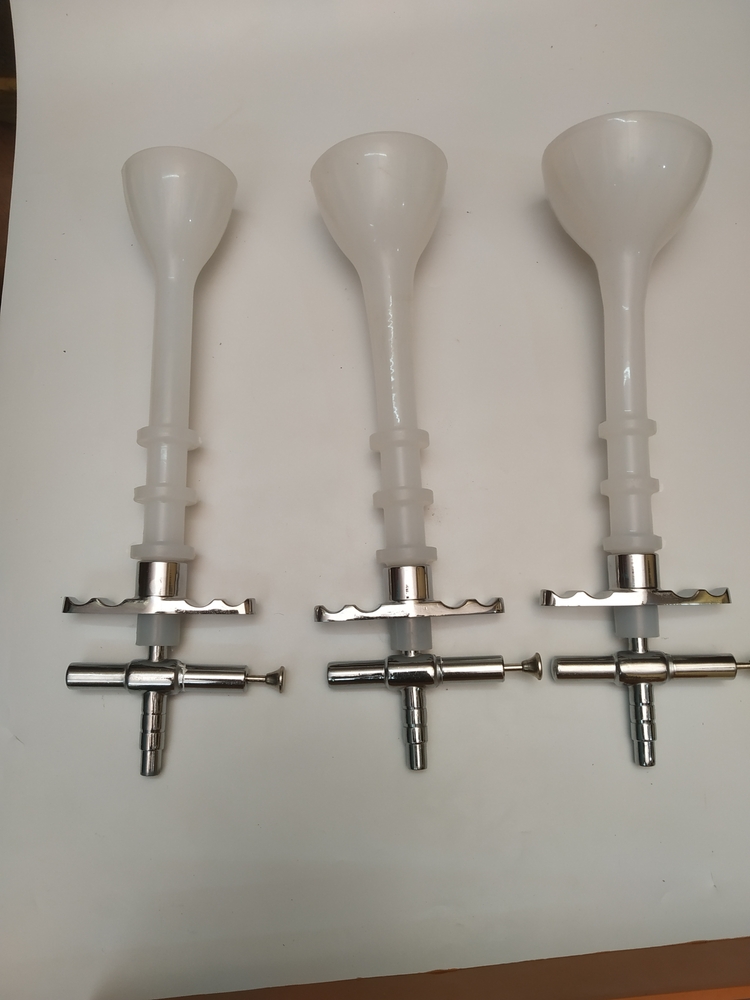
When a complicated labor stalls, medical providers often turn to “assisted” or “operative” delivery tools to help bring a baby into the world. Among the most common is the vacuum extractor. While it is to prevent the need for a Cesarean section (C-section), the misuse of this powerful tool can transform a routine birth into a lifetime of medical challenges. Use of a vacuum extractor can result in a medical malpractice claim.
Understanding the mechanics, history, and legal standards surrounding vacuum extraction is essential for families who suspect their child’s birth injury was the result of medical negligence.
The History of the Vacuum Extractor
The concept of using suction to assist delivery is surprisingly old, dating back to at least 1706 when James Yonge, an English surgeon, proposed a suction cup to ease difficult births. However, early designs were cumbersome and largely ignored in favor of obstetric forceps.
It wasn’t until 1954 that Swedish obstetrician Tage Malmström introduced the “Malmström Extractor,” the precursor to modern vacuum systems. His design used a metal cup and a hand-operated pump. In the decades that followed, technology evolved from rigid metal cups to soft, flexible plastic and silicone cups (such as the Kiwi Omnicup), making the procedure more popular among healthcare providers who viewed it as less traumatic to the mother than forceps.
Vacuum Extractor Medical Malpractice
Who Uses the Vacuum Extractor?
Vacuum extraction is typically performed by the following doctors and other medical providers:
Obstetricians (OB/GYNs): These are the primary providers with training in operative vaginal delivery.
Family Physicians: In some rural or smaller hospital settings, family doctors with specialized obstetric training may use vacuums.
Midwives: In certain jurisdictions and high-level hospital settings, highly trained certified nurse-midwives (CNMs) may use vacuum extractors under specific supervision.
When Is It Used? (Indications)
A doctor shouldn’t reach for a vacuum just to “speed things up.” It is for specific clinical situations, including:
Prolonged Second Stage of Labor: The mother has been pushing for hours (usually 2–3 hours depending on whether she has an epidural) and the baby is not descending.
Maternal Exhaustion: The mother is physically unable to continue pushing effectively.
Fetal Distress: The baby’s heart rate monitor shows signs of compromise (non-reassuring heart rate), necessitating an immediate delivery.
Maternal Medical Conditions: Conditions like heart disease or certain neurological issues where prolonged pushing would be dangerous for the mother.
How It Works and How It Is Used
The vacuum extractor works on the principle of suction and traction.
The Cup: The doctor inserts a small, bell-shaped cup into the vagina and places it onto the baby’s head.
The Flexion Point: For the procedure to be safe, the cup must be centered over the “flexion point”—a spot on the baby’s skull about 3cm in front of the posterior fontanelle (the soft spot). This ensures the baby’s head is pulled in a way that minimizes the diameter passing through the birth canal.
The Suction: Once the cup is placed, a vacuum pump (manual or electric) creates suction, attaching the cup firmly to the baby’s scalp.
The Pull: During a contraction, the doctor pulls on the handle of the vacuum while the mother pushes. Between contractions, the doctor often reduces the suction to minimize pressure on the baby’s skull.
When Things Go Wrong: Misuse of Vacuum Extractor and Medical Malpractice
Medical malpractice occurs when a healthcare provider deviates from the “standard of care,” resulting in injury. In vacuum-assisted deliveries, malpractice often involves:
1. Improper Placement
If the doctor does not place the cup exactly on the flexion point, the traction can pull the baby’s head at an awkward angle. This increases the risk of neck injuries and brain bleeds.
2. Excessive Force or Duration
There are strict limits on vacuum use. Generally, a doctor should not:
Use the vacuum for more than 15 to 20 minutes.
Attempt more than three “pulls” (contractions).
Continue if the cup “pops off” more than two or three times. Repeatedly reapplying the cup causes massive trauma to the scalp and underlying brain tissue.
3. Using the Device Too Early (High Station)
The baby’s head must be “engaged” (low enough in the pelvis) before a vacuum is used. Attempting to pull a baby from a “high station” is a recipe for catastrophic injury.
4. Ignoring Contraindications
A doctor should never use a vacuum if the baby is premature (less than 34 weeks), has a known bleeding disorder, or is too large for the mother’s pelvis (cephalopelvic disproportion).
Injuries to the Baby from Vacuum Extractor Medical Malpractice
While many babies born via vacuum have a temporary swelling called a chignon (a “cone-head” appearance), misuse can lead to permanent damage:
Subgaleal Hemorrhage: This is a life-threatening emergency where the vacuum shears the scalp away from the skull, causing blood to pool in the large space beneath. A baby can lose nearly half their blood volume into this space in minutes.
Cephalohematoma: Bleeding between the skull and its covering (periosteum). While usually less dangerous than a subgaleal bleed, it increases the risk of severe jaundice.
Skull Fractures: Excessive suction or pulling can crack the infant’s delicate cranial bones.
Brachial Plexus Injuries (Erb’s Palsy): If the doctor uses a vacuum to pull a baby who has a stuck shoulder (shoulder dystocia), it can tear the nerves in the neck and shoulder, leading to arm paralysis.
Retinal Hemorrhage: Bleeding in the eyes due to the intense pressure.
Types of Medical Malpractice Claims for Vacuum Extractor Use
If a child is injured by a vacuum extractor, families may pursue several types of legal claims:
Negligence in Execution: Claiming the doctor used the device incorrectly (e.g., too many pulls or improper placement).
Failure to Obtain Informed Consent: Claiming the doctor did not explain the risks of vacuum extraction versus a C-section, depriving the mother of the right to choose.
Delayed C-section: Claiming the doctor wasted too much time with the vacuum when it was clear an emergency C-section was the safer and necessary route.
Hospital Liability: Claiming the hospital failed to properly train staff or provided faulty equipment.
Conclusion on Vacuum Extractor Medical Malpractice
A vacuum extractor is a tool of “last resort” before surgery. When used with precision and restraint, it saves lives. When used with haste or negligence, it destroys them. If your child suffered a brain bleed, scalp injury, or nerve damage following a vacuum-assisted birth, you may be looking at a lifetime of medical bills.
If you have concerns about a vacuum extractor and birth injury medical malpractice, visit our free consultation page or video. Then contact the Kopec Law Firm at 800-604-0704 to speak directly with Attorney Mark Kopec. He is a top-rated Baltimore medical malpractice lawyer. The Kopec Law Firm is in Baltimore and pursues cases throughout Maryland and Washington, D.C.
What Our Clients Say About Us
At the Kopec Law Firm, we are grateful that satisfied clients express their appreciation!
Dear Mark, I just wanted to express my gratitude for your dedication to my case. As you know, it has been a long and upsetting process for me, which would have been a great deal longer had it not been for the hours you put in helping me with this emotional roller coaster. Thank you again.
Shannon T. in Anne Arundel County
Dear Mark, thank you so much for your help and kindness. You provided the guidance and assistance we needed to obtain some understanding in loss of our child. We will never forget the professional and personal service provided. If anyone is in need of legal representation, I will certainly send them your way. God bless.
Kim C. in Cecil County
I wanted to say thank you for spending time with me regarding my questions about legal issues. Mere words cannot really express my gratitude. You seem to truly care about people.
Client in Baltimore City
Dear Mr. Mark, I’m truly grateful to have had you work on my son’s case. You were up front at all times and were on key every step of the way. I will always recommend your firm. Thank you so much for helping my son. P.S. Every time my son sees you on TV, he says “Mom, that’s my lawyer, Mr. Mark.” 🙂 Thank you again. You did an excellent job on the...
K.N. in Baltimore City
Dear Mark, we want to thank you for all the hard work and time your firm put in our case. You took the time to listen to us and research our case. You were honest and up front regarding the case. You responded to questions and concerns quickly. We would highly recommend your firm and services to anyone who is in need of legal representation. We...
Rebecca T. in Prince George’s County
Super Awesome team and staff! Worked with them for a case they handled for my grandchild about 10yrs ago! Would definitely use them again! I recommend them to everyone I know. Could never thank them enough! Very thorough and knowledgeable! Always kept us in the loop throughout the entire process!!!!
Letha C. in Prince George’s County
Mark explained everything in detail and brought clarity to all of my concerns.
Doris in Edgwater
I am very happy and thankful for your help. You responded very quickly. I am very happy to recommend you.
Linda in Chevy Chase
Mark is a knowledgeable and empathetic lawyer who speaks directly and concisely to evaluate your problem. He doesn't use attorney jargon that confuses people, rather he talks clearly. Although he couldn't help me with my situation, the consultation I had was productive because he answered my questions and gave me some clarity.